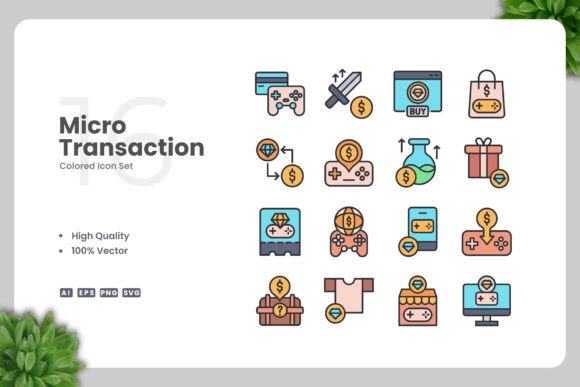
Review: Microtransaction Colored Icons for Embroidery
When I sit down to evaluate a new digital asset for my studio, I am rarely looking at it as a standalone image. I am looking at it as a blueprint for physical reality. As an experienced designer and embroidery product reviewer, my job is to bridge the gap between the clean, vector-perfect world of graphic design and the textured, thread-based reality of machine embroidery. Today, I am putting Microtransaction Colored Icons through that rigorous practical test.
The product description promises a "simple and clean design" suitable for everything from mobile apps to banners. While those are valid use cases for the original vector file, my focus is strictly on how this design translates when stitched into fabric. For craft business owners, Etsy sellers, and handmade shop owners, the difference between a good digital download and a profitable physical product lies in execution. Does this icon set hold up under the needle? Can it drive sales?
First Impressions and Visual Personality
The moment you load Microtransaction Colored Icons into your digitizing or preview software, the mood is immediately established. The aesthetic is modern, minimalist, and highly legible. In the world of embroidery, "clean" is not just a style choice; it is a technical necessity. Intricate details often get lost in the stitch density, but these icons rely on bold shapes and clear negative space.
Visually, the design feels professional and trustworthy. It does not scream for attention with chaotic patterns; instead, it offers a steady, reliable visual anchor. This makes it particularly effective for branding purposes. Whether you are creating a logo patch for a corporate client or a subtle accent on a tote bag, the personality here is one of efficiency and clarity. The color palette, being vibrant yet balanced, suggests versatility. However, as any embroiderer knows, screen colors do not always translate directly to thread. The potential for high contrast is there, which is exactly what we need for stitching clarity.
Real-World Application: From Screen to Stitch
Let’s move past the theory and look at a real-life scenario. Imagine you are preparing a batch of custom embroidered tote bags for an upcoming craft fair. You want something that appeals to a broad audience—something that says "organized," "modern," or "digital-savvy" without being too niche. You choose to feature a central icon from the Microtransaction Colored Icons collection.
In this context, the design performs exceptionally well. Because the shape is simple, it stitches quickly, reducing production time per unit. For small business owners and makers, time is money. A design that allows for rapid stitching while maintaining a premium look is a significant advantage. When placed on a sturdy canvas tote, the icon stands out against the fabric texture. The edges remain crisp, provided the hoop size is appropriate and the stabilizer is correctly applied.
This same logic applies to other merchandise. Consider a line of sweatshirts for a tech startup or a boutique clothing brand. A single, well-placed colored icon on the chest can elevate a basic garment into a statement piece. It works equally well for baby items, where safety and simplicity are paramount, or for holiday gifts where a recognizable symbol adds immediate appeal. The design’s adaptability means it fits seamlessly into a catalog of custom apparel, turning generic blanks into handmade products with perceived value.
Where Caution Is Required
However, no design is universally perfect. There are specific situations where Microtransaction Colored Icons requires careful consideration. If you plan to stitch these icons onto curved surfaces like baseball caps or fitted hats, you must be mindful of distortion. Simple shapes can warp if the tension is off or if the curve is too aggressive.
Furthermore, avoid placing these designs on thin or stretchy fabrics without adequate support. The stability of the thread relies heavily on the foundation. On dark fabrics, the contrast becomes even more critical; ensure your chosen thread colors provide enough separation from the background material. Additionally, while the design is described as simple, do not attempt to reduce it to extremely small hoop sizes. Tiny lettering or minute details within the icon may become muddy or disappear entirely under the bulk of the thread. For best results, keep the design scale proportional to the final product.
Impact on Product Value and Customer Trust
From a marketing perspective, the quality of the embroidery directly influences customer trust. A sloppy stitch job can make a high-quality product feel cheap. Conversely, a sharp, clean icon from Microtransaction Colored Icons signals professionalism. It tells the buyer that you care about the details.
This is particularly important for Etsy sellers and small shop product creators who compete in crowded markets. High-resolution printable mockups can show the design digitally, but the actual finished product must match that promise. When customers receive an item with precise satin stitches and consistent fill areas, they are more likely to leave positive reviews and return for future purchases. The design aids in brand consistency, allowing you to create a cohesive look across different items, from aprons to pillow covers.
Practical Designer Notes for Execution
Before committing to a large production run, I strongly advise following these practical steps:
- Test on Scrap Fabric: Always stitch a sample on the exact fabric you intend to use. This reveals how the fabric texture interacts with the thread.
- Check Thread Contrast: Evaluate the thread colors against your base material. What looks good on a monitor might vanish on navy blue cotton.
- Review Stitch Density: Ensure the stitch density is appropriate for the fabric weight. Too dense, and the fabric will pucker; too sparse, and the backing will show through.
- Confirm Hoop Size: Verify that the hoop size accommodates the design without unnecessary trimming.
- Use Proper Stabilizer: A reliable stabilizer is non-negotiable for maintaining the integrity of the design during and after stitching.
- Inspect Small Details: Zoom in on the vector file before digitizing. Check whether the design works for both personal and commercial projects, and confirm licensing terms before selling finished items.
Additionally, consider testing the design in black and white mockups. This helps determine if the shape holds up without the aid of color, ensuring structural integrity. If the icon is legible in monochrome, it will undoubtedly shine in full color.
Final Verdict
Microtransaction Colored Icons is a versatile, high-potential asset for the serious embroidery designer. Its strength lies in its simplicity and adaptability. It is not a complex, narrative-heavy piece, but rather a functional, stylish element that enhances a wide variety of embroidery projects. Whether you are producing commercial embroidery for clients or crafting unique personalized gifts for friends, this design offers a reliable foundation for success.
By respecting the technical limitations of the medium and leveraging the clean aesthetic of the graphics, you can create finished products that are both beautiful and commercially viable. It is a smart addition to any library of design assets, provided you approach it with the diligence and preparation that professional-grade work demands.