Reviewing Content Filter Color Icons for Embroidery
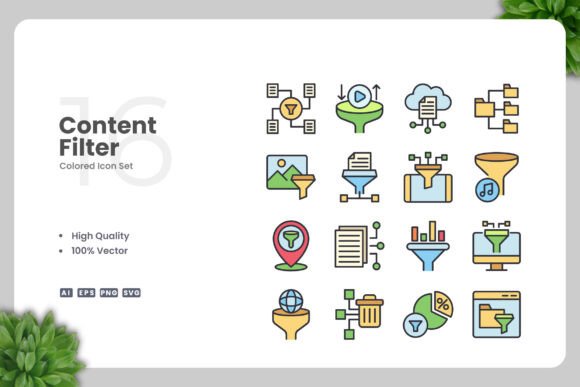
When I sit down to evaluate a new digital asset for my studio, I am rarely looking at it as a static image. I am looking at it as a blueprint for thread. As a designer who spends half her day in front of a screen and the other half under the needle of an embroidery machine, I have learned that what looks clean on a monitor does not always translate cleanly to fabric. Today, I am putting Content Filter Color Icons through its paces to see if they hold up in real-world production. These are categorized as Graphics within the Icons category, described simply as a "simple and clean design" that is editable in vector software. On paper, that sounds perfect. But can it survive the hoop?
First Impressions: The Designer’s Eye
The immediate appeal of Content Filter Color Icons lies in their clarity. In a market saturated with overly detailed, ornate, or cluttered designs, there is something refreshing about a set that prioritizes function and simplicity. When I first imported these into my digitizing software, I was struck by how crisp the paths were. Because they are vector-based, they scale without losing integrity, which is a massive advantage when you need to adjust the size of a specific icon to fit a particular garment area.
The mood they create is modern, approachable, and professional. They do not scream for attention; instead, they communicate clearly. This makes them incredibly versatile. You can imagine these sitting quietly on a corporate tote bag, adding a touch of personality without overwhelming the brand message. Or, they could serve as functional elements on a baby onesie, where parents want something cute but not visually chaotic. The "color" aspect mentioned in the title suggests that these assets likely come with predefined color palettes, which saves time during the initial setup phase, allowing me to focus on stitch selection rather than hex code hunting.
Real-World Application: From Screen to Stitch
Let’s talk about a specific scenario. Imagine you are preparing a batch of custom embroidered tote bags for a local craft fair. You want to add a subtle branding element—perhaps a small filter icon to represent "curated selections" or a tag representing "quality control." Using Content Filter Color Icons, you can place a single, well-defined icon near the handle attachment point. It adds value to the product. It signals that this is a boutique item, thoughtfully designed.
I also see strong potential here for personalized gifts. Consider a holiday gift set featuring kitchen towels. A simple, clean icon related to cooking or organization, stitched neatly onto the hem, elevates the perceived value of the item. It transforms a basic tea towel into a thoughtful, handmade product. Similarly, for custom apparel like sweatshirts or hoodies, these icons work beautifully as part of a larger graphic layout or as standalone accents on the chest or sleeve. They bring a sense of order and aesthetic balance that customers appreciate.
For Etsy sellers and small shop owners, these designs are goldmines for efficiency. Because they are easy to edit, you can quickly adapt them for different niches. A filter icon might work for a photography-themed hat, while another might suit a data-driven infographic style pillow cover. The ability to resize and change colors easily means you can test multiple mockups before committing to fabric, reducing waste and increasing your turnaround time for commercial embroidery orders.
Where Caution Is Required
However, no design is universally perfect, and Content Filter Color Icons has its limitations depending on how you execute the embroidery project. The primary concern with simple, clean vector lines is stitch density. If the original vector paths are too thin, converting them directly to embroidery without adjusting the stitch width can result in a fragile finish. Thin lines may break easily after washing, especially on items like aprons or caps that undergo frequent wear and tear.
I strongly advise against using these icons for tiny details on textured fabrics. If you are stitching onto a chunky knit sweater or a rough burlap sack, the clean edges of the icon will be lost. The texture will interfere with the precision of the satin stitch or fill stitch, resulting in a muddy, unclear image. Furthermore, on stretchy fabrics like spandex blends, tight, dense outlines can cause puckering. In these cases, you might need to convert parts of the design to running stitch or reduce the overall density to maintain a flat, professional look.
Another critical factor is contrast. While the icons are colorful in their digital form, embroidery relies heavily on thread contrast against the base fabric. A light blue icon on a white background might disappear entirely. Always check your thread colors against your chosen fabric swatch before starting production. Dark fabrics require bright, high-contrast threads, while light fabrics allow for more subtlety. Failing to account for this can ruin the visual impact of even the best-designed design assets.
Practical Notes for the Maker
Before you rush to print hundreds of printable mockups or start cutting fabric, follow these practical steps to ensure success:
- Test on Scrap Fabric: Never assume a design will work perfectly based on the digital preview. Stitch a sample on the exact fabric you plan to use. This reveals how the material interacts with the thread tension and stabilizer.
- Check Stitch Density: Review the underlying structure of the file. If the stitch density is too high for the fabric weight, you risk needle breakage or fabric distortion. Adjust the settings if necessary.
- Inspect Small Details: Zoom in on the smallest elements of the Content Filter Color Icons. Are they legible? Can they be stitched clearly? If a detail is too fine, consider simplifying it or removing it entirely.
- Confirm Licensing: Since you are likely planning to sell finished items, verify the license terms. Does the purchase allow for commercial use of the physical products? This is crucial for craft business owners to avoid legal issues.
- Use Proper Stabilizer: The choice of stabilizer (cut-away, tear-away, or wash-away) significantly affects the final appearance. For embroidered patches or items requiring durability, a cut-away stabilizer is often the safest bet.
Final Verdict
Content Filter Color Icons is a solid, reliable addition to any designer’s library. It excels in projects that demand clarity, modern aesthetics, and versatility. Whether you are creating digital embroidery files for clients, designing handmade products for your own shop, or crafting unique holiday gifts, these icons provide a strong foundation. They are not flashy, but they are effective. They respect the viewer’s eye and, when executed correctly, respect the fabric as well.
By approaching these designs with a critical eye—testing fabrics, adjusting densities, and ensuring proper contrast—you can transform simple vector graphics into high-quality, professional embroidery projects. For the savvy maker, this is exactly the kind of tool that bridges the gap between digital convenience and tangible craftsmanship.